



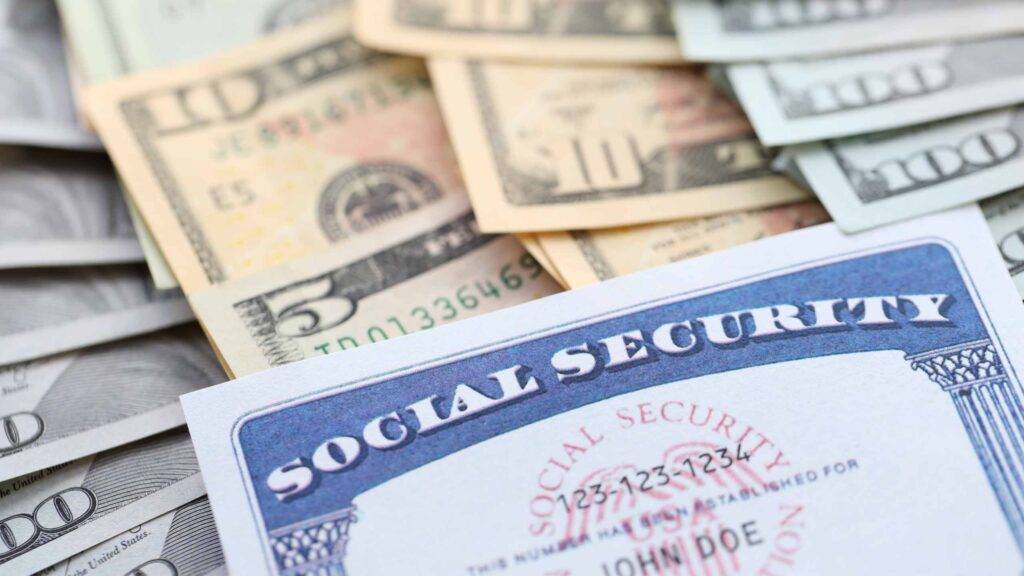
The Social Security and Medicare Trustees released their 2026 report on June 9, and most of the coverage treated the numbers as an actuarial or political story. For a tax practitioner there are two reasons to read it more closely. This is the first Trustees Report to absorb the One Big Beautiful Bill Act, and part of the worsening traces to a change in the individual income tax code, a provision most of us have already been applying on 2025 returns. It is also the report your clients are half-reading and drawing the wrong conclusions from, and you are the person they will ask. We’ll be covering what’s new for practitioners, and help you talk clients worried about a failing social security system back to the facts.

Depletion Dates and a Widening Deficit
On a combined basis, OASDI reserves still deplete in the third quarter of 2034, with 83% of scheduled benefits payable, unchanged from last year. OASI on its own now depletes in the fourth quarter of 2032 at 78% payable, a quarter earlier than the prior report, and Medicare’s Hospital Insurance fund in the second quarter of 2033 at 89% payable, also a quarter earlier.
The figure that moved is the long-range actuarial deficit: 4.42% of taxable payroll against 3.82% last year. The Committee for a Responsible Federal Budget called that 0.60-point jump the largest single-year deterioration in nearly half a century. Reserves fell $160 billion in 2025 to $2.56 trillion, and the report’s 75-year shortfall, measured in present value, now stands at $29.3 trillion, up from $25.1 trillion a year ago. This is not a program drifting gently toward a distant problem. The gap widened materially in a single year, and the depletion dates now sit inside the working lifetime of clients you are advising today.
Where the Tax Code Enters the Projection
The Trustees name three drivers behind the worsening numbers: a lower ultimate fertility assumption, dropped from 1.90 to 1.75, tighter immigration assumptions, and OBBBA. The report is explicit that the fertility change is the single largest contributor to the increased deficit. OBBBA is the piece that sits in our lane, and the only one of the three that is a change to the tax code.
Revenue from the income taxation of benefits is earmarked, and it splits by tier. The tax on the first 50% of benefits under IRC §86 is credited to the OASI and DI trust funds. The incremental revenue from the 85% tier is credited to Medicare HI. That split is why an income tax change impacts two funds at once, and why the benefit-tax line moves in both the OASDI and HI (Medicare) projections.
A direct repeal of the tax on benefits was off-limits under the reconciliation rules that bar changes to Social Security, so Congress worked the revenue from the income side of the return instead. Two things pulled projected benefit-tax revenue below the prior-law baseline. First, making the 2017 rates and the enlarged standard deduction permanent means benefits are taxed at lower rates than the baseline assumed, which had TCJA expiring after 2025 and rates snapping back up. Second, the temporary senior deduction under IRC §151(d)(5)(C) (OBBBA §70103) adds to that reduction through 2028.
Here is the scale of it. Social Security’s actuaries size the program’s shortfall as a share of the wages the payroll tax reaches, and this year that shortfall grew by 0.60%. OBBBA accounts for 0.16 of that 0.60. The rest is demographic, chiefly the lower fertility and immigration assumptions. So, the tax law is the smaller part of what worsened the outlook this year, but it is real, and it is the only part that came from Congress rather than from the actuaries revising their assumptions about births and immigration.
That 0.16 is a 75-year figure, and the senior deduction runs only four of those years, so nearly all of it comes from the permanent piece, the lower rates and larger standard deduction, not from the deduction that expires in 2028. Here is why the permanent piece bites. The income thresholds that decide how much of a Social Security benefit is taxed have not been adjusted for inflation since 1993, so under the old law more benefit income drifted into tax every year, sending a growing stream of revenue to the trust funds. OBBBA locked in lower tax rates, which shrinks that stream for good. The drag the Trustees built in is not a four-year blip.
What the Report Says Closing the Gap Would Require
The report puts numbers on the gap. To reach solvency for the full 75-year period through 2100, if the change were made in January 2026, it would take one of the following, or an equivalent combination:
- Raise the payroll tax rate from 12.40% to 16.65%
- Cut scheduled benefits by 25.2% for all current and future beneficiaries
- Or, cut them by 30.3% for only those becoming eligible in 2026 and later.
The report also prices the cost of waiting. Defer action to reserve depletion in 2034, and the same 75-year solvency requires a payroll tax rate of 17.30% or an across-the-board benefit cut of 28.5%, now concentrated on fewer years and fewer cohorts. That contrast, not any single figure, is the report’s real argument for acting early.
Worth noting for clients who ask: lifting or removing the wage cap, the option that gets the most airtime, is not among the Trustees’ illustrations here. The report frames the gap in terms of the rate or the benefit formula. The 2026 taxable maximum is $184,500, and the report projects roughly $190,200 for 2027.
The Urgency Gap
The most useful thing the report does for a practitioner is highlight and call out the price of continued delay, and the price keeps climbing. The 4.42% deficit is the widest in roughly half a century. The Trustees close their report, as they have in essentially the same language since the early 2000s, by recommending that lawmakers act in a timely way so changes can be phased in gradually. That recommendation has now gone unheeded across more than two decades and both parties. The two public trustee positions, meant to give the public an independent voice on the funds, have sat vacant since July 2015.
The most concrete response to this year’s report so far is a bipartisan bill from Representatives Suozzi and Cole to create a solvency commission modeled on the 1983 panel, which proposes a process for making decisions on these issues rather than a fix. None of that changes what you file. The machinery has described the problem clearly and consistently for twenty years, and the required fix has only grown while the depletion dates have drawn closer.
Correcting Your Clients
Clients are arriving with two beliefs that need correcting. The first is that Social Security is going away. It is not. Even if Congress does nothing, the program does not stop paying. At depletion it pays what continuing payroll taxes cover, which the report puts at 78% of scheduled OASI benefits in 2032 and 83% of combined benefits in 2034. The realistic exposure is a benefit reduction of about 22% when the OASI fund depletes in 2032, not a zero. That is serious, but it’s not the collapse that headlines suggest. The calmer, more accurate version is what lets a client plan rather than claim early out of fear.
The second belief is that OBBBA made Social Security tax-free. It did not. A client who is sure it did will trim withholding or skip an estimate and get a surprise in April. The senior deduction helped some retirees for 2025 and runs through 2028. It did not change when benefits are taxed.
For clients who will begin drawing SS benefits in the early 2030s, the conversation worth having is two-fold. Run their retirement income projection on full benefits and a second one on a reduced-benefit case, and let that inform their SS claiming-age and withdrawal-sequencing decisions rather than a headline doing it for them. Claiming early to get ahead of a cut usually backfires, since a permanently reduced benefit would simply be reduced again if a haircut arrives. None of this is personalized financial advice. It does keep clients focused on what they control: their own savings rate, their claiming age, and their tax planning inside the 2025 through 2028 window while the senior deduction is available.
The Practitioner's Takeaway
Read the 2026 report as two things at once. As analysis, it confirms that OBBBA’s individual income tax changes are now built into Social Security’s financing on the revenue side, and that the larger, permanent share of that effect will outlast the temporary senior deduction. As a client tool, it hands you the real numbers to set against the headlines: benefits are not disappearing, the exposure is a benefit reduction in the early 2030s, and the cost of closing the gap rises every year the problem stays unresolved. On current projections the OASI shortfall arrives in 2032 and the combined funds in 2034, close enough that the clients asking about it now are the ones who will live through it.
Sources:
- 2026 OASDI and Medicare Trustees Reports and Summary (SSA, June 9, 2026); SSA Office of the Chief Actuary
- Center for Retirement Research at Boston College (0.16% OBBBA effect)
- IRC §§86, 151(d)(5)(C); P.L. 119-21 §70103; H.R. 9187 (Bipartisan Social Security Commission Act)
- SSA 2026 contribution-and-benefit-base announcement
- Committee for a Responsible Federal Budget analysis of the 2026 report
Recent Stories

First-Time Penalty Abatement Is Being Replaced
August 25, 2026

Saver’s Match Replaces the Saver’s Credit in 2027
August 18, 2026
Next Up...

Your guide to earning the CMA, from the education and experience requirements to the two-part
6 min read
Employers can now fund Trump accounts up to $2,500 per employee tax-free. Proposed regs spell
7 min read
Learn how many CE hours enrolled agents need, the 3-year cycle, the annual minimum, the
7 min read