









Shop the Spooky Sale: We’ve got scary deals on conferences, tax updates, seminars, and credit packages.
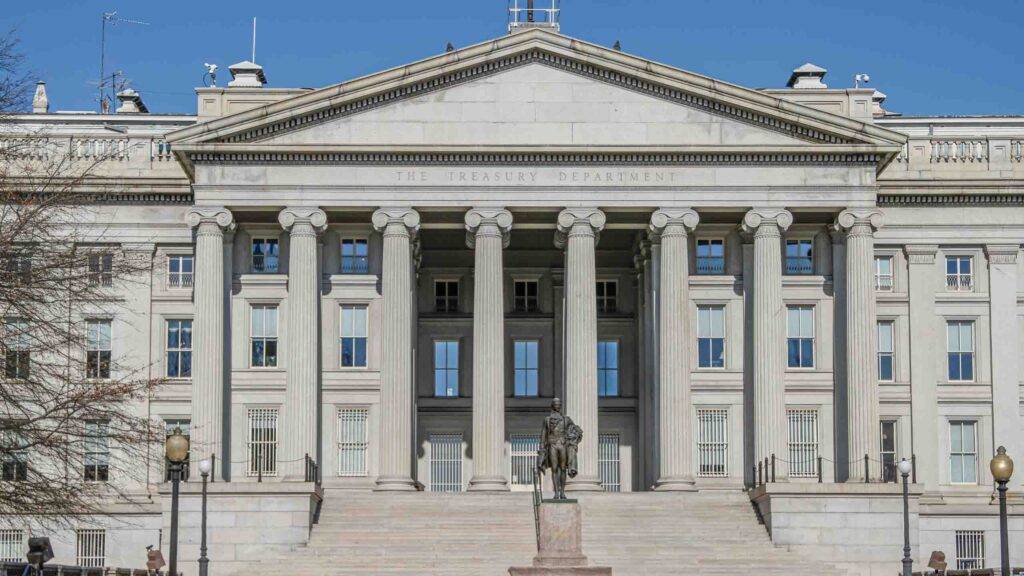
Treasury and the IRS issued Notice 2026-48 on August 7, describing the anticipated regulatory approach for the federal Saver’s Match, which replaces the Saver’s Credit under IRC §25B for tax years beginning after December 31, 2026. Created by §103 of the SECURE 2.0 Act, which added IRC §6433, the match pays eligible taxpayers 50% of the first $2,000 of qualified retirement contributions, a maximum of $1,000 per person per year. Spouses qualify separately, so a couple who each contribute $2,000 collect a combined $2,000. The first matches will be paid in 2028 based on 2027 contributions. The notice also begins implementation of Executive Order 14403, which directs Treasury to launch TrumpIRA.gov by January 1, 2027, listing low-cost IRA providers that accept match deposits, aimed at self-employed workers and employees without a workplace plan.
The §25B Saver’s Credit was nonrefundable, so the low-income and moderate-income savers it targeted often had no tax liability to offset and collected nothing. The Saver’s Match is money, not a credit. The government deposits it directly into the taxpayer’s retirement account. To receive it, the taxpayer must file a federal income tax return and designate an eligible account, and the receiving plan or IRA must be one that accepts Saver’s Match deposits. There is one quirk: the match must land in a traditional IRA or a non-Roth workplace account, even when the contribution that earned it was a Roth contribution. Where the computed match is more than zero but under $100, the taxpayer may instead take it as a refundable credit on the return.
The individual must be at least 18 at year-end, cannot be claimed as a dependent, cannot be a full-time student, and, new under §6433, generally cannot be a nonresident alien. Qualified contributions include traditional and Roth amounts contributed to IRAs, 401(k), 403(b), and governmental 457(b) plans, reduced by distributions taken from retirement accounts during a testing period. That clawback is the trap. A client who contributes $2,000 and pulls money out of an old IRA the same year has shrunk or eliminated the match. Treasury can also recover matches paid in error under §6433(f), so a bad income estimate can produce a takeback. The full 50% match applies at 2027 modified AGI up to the amounts below, phasing down to zero across a range that stays fixed in width ($30,000 joint, $22,500 head of household, $15,000 single) while the starting thresholds index for inflation after 2027.
|
Reality check: A married couple with $38,000 of MAGI each put $2,000 into IRAs for 2027 and receive a $2,000 federal deposit in 2028, a guaranteed 50% return before a dime of earnings. Now suppose one spouse also cashes out a $1,500 balance from an old 401(k) during the testing period. That spouse’s qualifying contributions drop to $500 and the match to $250, turning a $1,000 benefit into $250 over a withdrawal that netted about $1,100 after tax and penalty.
Start flagging 2027 now and look past your client list to the working adult children of wealthier clients. A parent’s gift funding a child’s $2,000 IRA contribution captures a 50% federal match on top of the gift, well inside the $19,000 annual exclusion. Pair every match conversation with a do-not-touch conversation, since testing-period withdrawals claw back qualifying contributions. Before designating a receiving account, confirm the custodian accepts Saver’s Match deposits; TrumpIRA.gov is expected to list providers that do. Watch filing status at the margin, because married filing separately uses the lowest thresholds. Employer plan clients should decide during 2026 plan-design discussions whether their plans will accept match deposits, since recordkeepers need lead time. And remember these are anticipated rules: proposed regulations are coming, and comments are due October 5, 2026, so details can still move.
Sources: IRS, IR-2026-89, Treasury, IRS Begin Implementing Saver’s Match, Aug. 7, 2026; IRS, Notice 2026-48; IRC §6433, Saver’s Match.
Looking for more industry-leading insights from our experts? Check out the Summer Edition of America’s #1 Federal Tax Update. Get the mid-year guidance tax practitioners need on OBBBA, individual and business tax changes, entity issues, payroll reporting, IRS practice, and the planning questions already shaping the 2026 tax year.
Subscribe to our news, analysis, and updates to receive 10% off your first purchase of an on-demand digital CPE course.