




CONTINUING EDUCATION FOR TAX & FINANCIAL PROFESSIONALS

The 2026 Summer Federal Tax Update is here – Get ahead of client questions with mid-year insights

Webcast

Applying the New Expected Credit Loss Model

Get a practical understanding of ASC 326 and the current expected credit loss model. This course covers scope, measurement approaches, policy elections, and disclosure issues that matter when applying CECL in real-world financial reporting.

Individual
Teams

$98.00

Webcasts are available for viewing Monday – Friday, 8am – 8pm ET,
and Saturday & Sunday, 10am – 6pm ET.
Without FlexCast, you must start with enough time to finish. (1 Hr/Credit)

 Secure Transaction
 Secure Transaction
Please fill out the form below and we will reach out as soon as possible.

CPE Credits

2 Credits: Accounting
Course Level
Basic
Format
Webcast

Course Description

Apply the new expected credit loss model with greater confidence. This CPE course explains how ASC 326 changes the way entities evaluate and record credit losses, with a practical focus on the financial assets most relevant to many nonpublic entities, including trade receivables, contract assets, notes receivable, held-to-maturity debt securities, leases, and certain off-balance-sheet credit exposures. It also clarifies the shift from the incurred loss model to a lifetime expected credit loss approach that incorporates historical experience, current conditions, and reasonable and supportable forecasts.

Along the way, Jennifer Louis walks through common measurement methods, pooling considerations, contractual term issues, recoveries, accrued interest policy elections, collateral-dependent assets, presentation and disclosure requirements, and newer guidance affecting Topic 606 receivables. The result is a focused CPE update for professionals who need to understand how CECL applies in practice, where judgment matters most, and what to watch for when implementing or reviewing the allowance for credit losses.

Show More
Show Less

Need Flexibility?

Purchase now, choose later. Your credits are ready whenever you find the perfect courses for you.

MOST POPULAR

20 Credits

Was $980 Now $637

You Save $343 (35% Off)

40 Credits

Was $1960 Now $1176

You Save $784 (40% Off)

BEST VALUE

80 Credits

Was $3920 Now $1960

You Save $1960 (50% Off)

40 Credits

Was $1960 Now $1176

You Save $784 (40% Off)

60 Credits

Was $2940 Now $1617

You Save $1323 (45% Off)

BEST VALUE

80 Credits

Was $3920 Now $1960

You Save $1960 (50% Off)

Learning Objectives

After completing this course, you will be able to:

  • Identify the financial instruments and receivables within the scope of ASC 326 and distinguish them from items outside the scope of the CECL model.
  • Recognize key differences between the CECL model and legacy impairment guidance, including the requirement to estimate lifetime expected credit losses using historical data, current conditions, and reasonable and supportable forecasts.
  • Determine appropriate approaches for measuring the allowance for credit losses, including common estimation methods, pooling concepts, contractual term considerations, and recoveries.
  • Recall key accounting policy elections, presentation requirements, and disclosure considerations related to accrued interest, trade receivables, off-balance-sheet exposures, and allowance rollforwards.
  • Recognize the practical expedient and accounting policy election introduced for certain current Topic 606 receivables, including effective date and transition considerations.
Show More
Show Less

Course Specifics

Course ID
WC1126474133
Revision Date
June 15, 2026
Prerequisites

None

Advanced Preparation

None

Compliance Information

NASBA Provider Number: 103220

CMA Notice: Western CPE makes every attempt to maintain our CMA CPE library, to ensure a course meets your continuing education requirements please visit Insitute of Management Accountants (IMA)

CFP Notice: Not all courses that qualify for CFP® credit are registered by Western CPE. If a course does not have a CFP registration number in the compliance section, the continuing education will need to be individually reported with the CFP Board. For more information on the reporting process, required documentation, processing fee, etc., contact the CFP Board. CFP Professionals must take each course in it’s entirety, the CFP Board DOES NOT accept partial credits for courses.

Meet The Experts

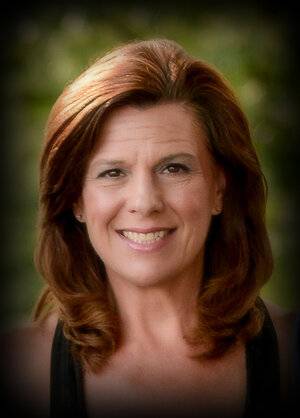
Jennifer F. Louis, CPA has over 25 years experience in designing and instructing high-quality training programs in a wide variety of technical and “soft skills” topics needed for professional and organization success.  In 2003 she founded Emergent Solutions Group, which is dedicated to meeting organization’s professional training needs on a project or part-time basis.  Jennifer serves a wide variety of clients, including public accounting firms, state CPA societies, private industry corporations, and public sector agencies.Previously Jennifer served as the Director of Audit Product Development at Surgent Professional Education for three years.  Prior to that, Jennifer was Executive Vice President/Director of …