









Pre-Order the Federal & California Federal Tax Updates Today
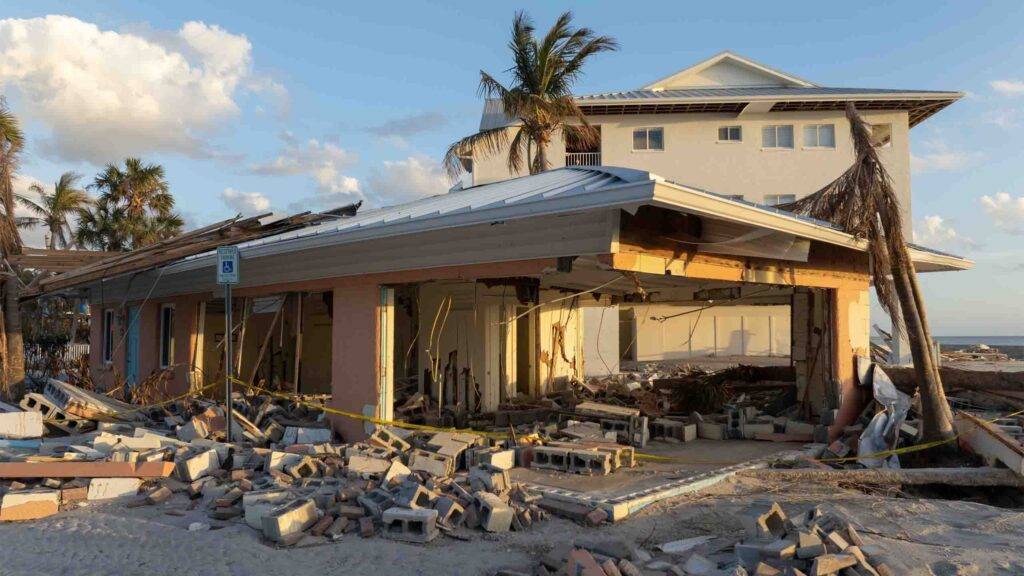
The special rules for disaster-related personal casualty losses have been living on borrowed time since 2020, riding one temporary extension after another, and expiring in between. On September 11, 2026, the President signed H.R. 5366, the Doug LaMalfa Federal Disaster Tax Relief Certainty Act. The rules are now in the Internal Revenue Code, and the wildfire relief payment exclusion has a permanent section number of its own. Two provisions, both retroactive, affect returns already filed.
Section 2 of the Act adds §165(h)(6), which allows a “qualified net disaster loss” to be deducted without regard to the 10 percent of AGI floor in §165(h)(2)(A)(ii). Ordinary personal casualty losses, such as investment losses from theft or scams, or other disaster losses not rising to the level of a “qualified net disaster loss,” still run that gauntlet; only the “qualified” disaster piece skips it. The Act also rewrites the per-casualty floor in §165(h)(1), which now reads $100 generally and $500 for qualified disaster-related personal casualty losses. A qualified net disaster loss is the excess of qualified disaster-related personal casualty losses over personal casualty gains, per §165(h)(6)(B).
Section 2(c) adds §63(b)(8), so a taxpayer who does not itemize subtracts the qualified net disaster loss in arriving at taxable income, on top of the standard deduction. Note the drafting choice. Congress put this in §63(b) rather than treating it as an increase in the standard deduction under §63(c), which is how the 2020 legislation handled it. Because §56(b)(1)(E) disallows only the §63(c) standard deduction for AMT purposes, the §63(b)(8) deduction is not swept up. The Joint Committee on Taxation revenue estimate reflects the same reading.
Prior law made you clear two hurdles: the major disaster had to be declared inside a stated window, and the incident period had to begin on or before a separate cutoff. New §165(h)(6)(C)(ii) has one test. A qualified disaster area is any area for which the President declared a major disaster under section 401 of the Stafford Act if the incident period begins on or after December 28, 2019, and before January 1, 2027. Declaration date is now irrelevant. That eliminates the trap where a slow FEMA declaration pushed an otherwise deserving client out of the relief.
To determine the incident period, go to the FEMA website at https://www.fema.gov/disaster/declarations, select the applicable disaster, the incident period will be reported there, then select “Designated Areas” to determine each county which would be eligible.
The §165 and §63 amendments apply to taxable years beginning after December 31, 2024. Section 2(d)(2) shuts off the predecessor provisions for those same years: §304(b) of the Taxpayer Certainty and Disaster Tax Relief Act of 2020 (Division EE of P.L. 116-260) and §70438 of OBBBA (P.L. 119-21). Under the prior rules as last extended by OBBBA, the door closed on incident periods beginning after July 4, 2025. A client whose disaster began after that date got no special treatment on a 2025 return prepared under the old law. Those losses qualify now. Pull the files.
A disaster whose incident period begins in December 2026 stays qualified even if the loss is sustained and claimed in 2027, because the statutory cutoff attaches to the start of the incident period. The §165(i) election to claim a federally declared disaster loss on the prior year return also still works, since 2025 and 2026 both sit inside the window.
Section 3, of the bill, adds §139M, excluding from an individual’s gross income any qualified wildfire relief payment. That covers compensation for losses, expenses, or damages, and the statute specifically names additional living expenses, lost wages, personal injury, death, and emotional distress, but only to the extent the item is not compensated by insurance or otherwise. Lost wages paid by an employer that would have paid them anyway are not eligible for the exclusion. A qualified wildfire disaster is any federally declared disaster, as defined in §165(i)(5)(A), declared after December 31, 2014, and before January 1, 2027, resulting from a forest or range fire. The exclusion applies to payments received in taxable years beginning after December 31, 2025, which picks up exactly where the Federal Disaster Tax Relief Act of 2023 left off.
This is the part settlement clients care about. The January 1, 2027 cutoff applies to the disaster declaration, not to the payment. A client collecting on a 2018 Camp Fire claim, a 2021 Marshall Fire claim, the 2023 Maui fires, or the January 2025 Los Angeles fires can receive money in 2029 and still exclude it. Under the 2023 Act, the exclusion ran out for receipts in taxable years beginning after 2025, which meant trust distributions and settlement timing carried real tax risk. That risk is gone.
Section 139M(c) denies a deduction or credit for any expenditure to the extent of an amount excluded with respect to that expenditure and prohibits any basis increase arising from costs incurred by funds from excluded amounts. A client who already deducted a casualty loss and later collects on the same loss cannot exclude the recovery and keep the deduction for the same dollars. Generally, funds received attributable to a casualty loss deducted in a prior year, are reported in the year of receipt as other gross income, the prior year return is not amended.
Start with 2025 returns. Any client in a federally declared disaster area with an incident period beginning after July 4, 2025 was prepared under a narrower rule and may now qualify for the $500 floor, the AGI-floor bypass, and the deduction without itemizing. Run the amended return math before assuming it is not worth the effort, because the non-itemizer piece can be meaningful for retired clients with modest AGI who lost a home.
On the wildfire side, the planning question has changed. There is no longer a federal reason to push a settlement into a particular year to catch the exclusion, so the timing conversation with counsel can focus on the litigation rather than the calendar. Watch §139M, though. The statute relates to compensation for losses, expenses, or damages. Punitive damages and interest on a settlement are not compensation for a loss, and Congress did not address either one. Treat those components separately until we see guidance. The allocation of a settlement among its components is going to matter more, not less.
Watch for state conformity. Nothing in H.R. 5366 binds a state, and the states that ran their own wildfire settlement legislation did so on their own timelines. Finally, note what is not here. This is a two-provision bill. There is no qualified disaster employee retention credit, no special retirement plan distribution relief, and no earned income credit lookback.
Sources:
Subscribe to our news, analysis, and updates to receive 10% off your first purchase of an on-demand digital CPE course.