


$116.00 – $136.00Price range: $116.00 through $136.00
Webcasts are available for viewing Monday – Friday, 8am – 8pm ET,
and Saturday & Sunday, 10am – 6pm ET.
Without FlexCast, you must start with enough time to finish. (1 Hr/Credit)
Please fill out the form below and we will reach out as soon as possible.
CPE Credits
4 Credits: Taxes
Course Level
Overview
Format
Self-Study
Course Description
This course is an overview of basic fringe benefits and examines their mechanics, compensation methods, valuation, withholding, and accounting. Achievement awards, term life insurance, medical reimbursement, meals & lodging, educational assistance, dependent care, employer-provided automobiles, interest-free loans, etc. are identified. Employer and employee economic and tax considerations are recognized. Fringe benefit requirements and limits are specified and ERISA compliance requirements are determined.
Need Flexibility?
Purchase now, choose later. Your credits are ready whenever you find the perfect courses for you.
Learning Objectives
Upon successful completion of this course, participants will be able to:
- Recognize basic fringe benefit planning by determining “income” under §61, identify the unusual tax-favored compensation advantage of qualified fringe benefits, and determine the fair market value of a fringe benefit under the general valuation rule and the special two-month pour-over accounting rule.
- Identify the rules for group term life insurance under §79 stating how to implement proper coverage and determine the mechanics of self-insured medical reimbursement plans under §105.
- Identify the rules for excluding the value of meals and lodging under §119, and “cafeteria plans” and recognize the requirements and limits of employee educational assistance programs and dependent care assistance.
- Identify “no-additional-cost services” and determine what property or services are excludable from income as qualified employee discounts under §132(c), and specify exceptions to working condition fringes and de minimis fringes.
- Determine the requirements for qualified transportation fringe benefits under §132(f), specify valuation methods for employer-provided automobiles, and identify the requirements and benefits of adoption assistance programs.
- Recognize the income inclusion of moving expense reimbursement and below market loans and identify ERISA compliance requirements.
Course Specifics
SS826487702
August 26, 2026
General understanding of federal income taxation.
None
100
Compliance Information
IRS Provider Number: 0MYXB
IRS Course Number: 0MYXB-T-02839-26-S
IRS Federal Tax Law Credits: 4
CTEC Course Number: 2071-CE-02284
CTEC Federal Tax Law Credits: 4
CFP Notice: Not all courses that qualify for CFP® credit are registered by Western CPE. If a course does not have a CFP registration number in the compliance section, the continuing education will need to be individually reported with the CFP Board. For more information on the reporting process, required documentation, processing fee, etc., contact the CFP Board. CFP Professionals must take each course in it’s entirety, the CFP Board DOES NOT accept partial credits for courses.
CTEC Notice: California Tax Education Council DOES NOT allow partial credit, course must be taken in entirety. Western CPE has been approved by the California Tax Education Council to offer continuing education courses that count as credit towards the annual “continuing education” requirement imposed by the State of California for CTEC Registered Tax Preparers. A listing of additional requirements to register as a tax preparer may be obtained by contacting CTEC at P.O. Box 2890, Sacramento, CA, 95812-2890, by phone toll-free at (877) 850-2832, or on the Internet at www.ctec.org.
Meet The Experts

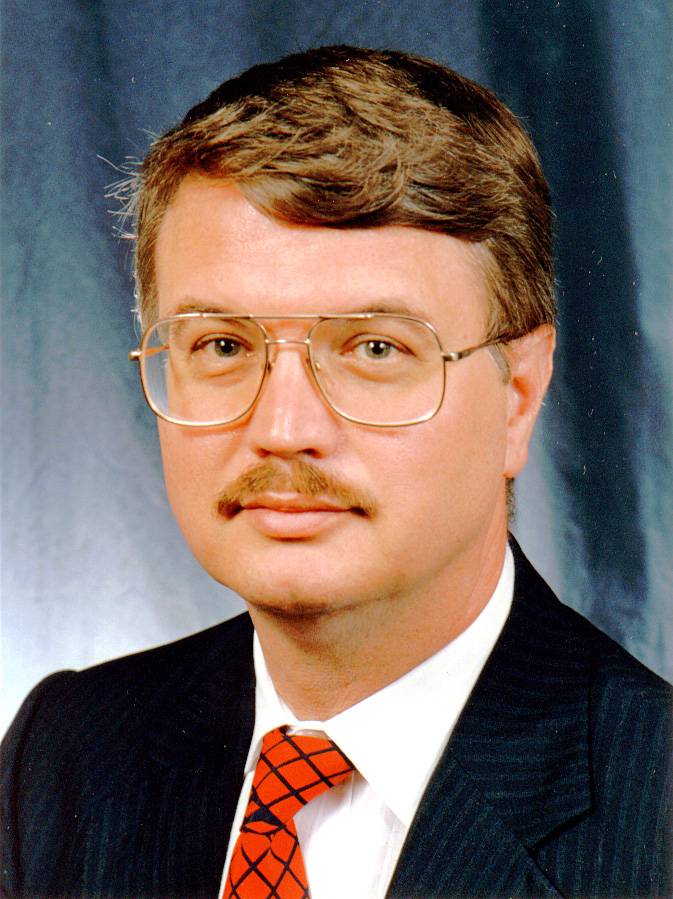
Danny Santucci, BA, JD, is a prolific author of tax and financial books and articles. His legal career started with the business and litigation firm of Edwards, Edwards, and Ashton. Later he joined the Century City entertainment firm of Bushkin, Gaims, Gaines, and Jonas working for many well-known celebrities. In 1980, Danny established the law firm of Santucci, Potter, and Leanders in Irvine, California. With increasing lecture and writing commitments, Danny went into sole practice in 1995. His practice emphasizes business taxation, real estate law, and estate planning. Speaking to more than 100 groups nationally each year, he is known …