









Starting on or about October 1, 2026, Treasury will open a Trump account for nearly every child under 18 who has a work eligible social security number and doesn’t already have one. No form, no sign-up. That is the headline from temporary regulations released September 30, 2026 (TD 10056), and it’s likely to generate client questions this fall.
A Trump account lets money grow tax-deferred for a child until adulthood, and other people can put money in. Babies born in 2025 through 2028 can receive a $1,000 government contribution under §6434. Charities and state and local governments can fund contributions for entire groups of children. The Michael and Susan Dell Foundation has already pledged $6.25 billion for children born 2016 through 2024 in ZIP codes with median household income under $150,000. Parents, grandparents, and employers can also contribute within an annual limit.
The catch is that the account Treasury opens automatically, called an “auto account,” can only receive the charity and government group contributions and the $1,000 pilot contribution. Family and employer money can’t go in until a parent or guardian “claims” the account, see §1.530A-1T(e).
Just as important, the $1,000 pilot money is not automatic. Treasury can open the account, but it cannot make the pilot program election. Parents of a child born 2025 through 2028 who have not made that election still need to make it, or the child doesn’t get the $1,000.
Opt-in wasn’t working. By July 30, 2026, about 5.6 million children had been enrolled through Form 4547, out of roughly 73 million eligible, and lower-income families were the least likely to sign up. Treasury estimates opt-in enrollment would have settled near 50%, compared with nearly 100% under automatic enrollment. Foundations also told Treasury they want their money to reach every child in a group, not only children whose parents knew to sign up.
Treasury’s March 2026 proposed regulations (REG-117270-25, 91 FR 11194) said automatic enrollment wasn’t feasible because of taxpayer privacy rules under §6103. Those are now withdrawn. The fix is a pooled structure: each child has a separate account, but investments are held in a master group trust meeting Rev. Rul. 81-100, so the trustee never sees individual taxpayer information. See §1.530A-1T(b)(6).
A Trump account is a traditional IRA with special rules through December 31 of the year the child turns 17. §1.530A-1T(b)(3). During that period, no distributions are allowed and the money must be invested in U.S. stock index funds with fees of no more than 0.1%. After that, normal IRA rules generally apply.
How the $5,000 limit works. During the growth period, total contributions are capped at $5,000 a year, indexed for inflation after 2027. §530A(c). Employer contributions excluded from the employee’s income under §128, up to $2,500 a year, count toward that $5,000. If an employer puts in $2,500, the family can add only $2,500 more for that child. Family contributions are not deductible, but they create basis for purposes of §72. The $1,000 pilot contribution and the charity and government group contributions do not count against the limit.
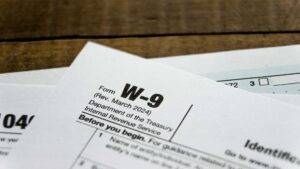
Pilot program election. Only the individual who expects the child to be his or her qualifying child under §152(c) can make the §6434 pilot program election. The child must be a U.S. citizen born in 2025, 2026, 2027, or 2028 with a work eligible social security number. The election is made on Form 4547 or through Treasury’s online application. If a family made the pilot election but never activated an account, the $1,000 can still land in the child’s auto account. §1.530A-1T(e).
Claiming an auto account. A parent or guardian with legal authority over the child’s finances, or the child once he or she has legal capacity, claims the account through Treasury’s online application. §1.530A-1T(f). The claimant must verify identity and legal authority and sign a §6103(c) disclosure consent, which is more than Form 4547 required. The family must then activate the new account by signing the trustee’s account agreement before the money moves. §1.530A-1T(d)(3). If more than one person files a claim, the first to activate controls the account, §1.530A-1T(f)(2), which matters for divorced or separated parents.
Families who already filed Form 4547. If the account was opened and activated, nothing changes.
Technical points. An existing IRA cannot be converted into a Trump account. §1.530A-1T(c)(2)(ii). A child can have only one funded Trump account at a time. §1.530A-1T(b)(12). A child reaches an age on the birthday itself. §1.530A-1T(c)(5). If a child dies before a funded auto account is claimed, it becomes an ordinary IRA payable to the estate. §1.530A-1T(e)(5).
Charitable clients. A gift to a 501(c)(3) that funds group contributions is deductible under §170, and the contributions are not taxable to the child under §139J. Private foundations and donor advised funds get relief from the §4945 and §4966 expenditure responsibility rules, and donors can contribute publicly traded stock, generally held in the accounts for five years. §1.530A-7T(d)(3), (e).
More to come. Reporting rules and final investment (proposed §1.530A-3) and §128 employer contribution rules. Comments on the parallel proposed regulations (CC-00226466-26) are open.
An account will likely appear for the child this fall, but it is a holding account. To add money, get employer contributions, or collect the $1,000 for a new baby, the family needs to act.
Subscribe to our news, analysis, and updates to receive 10% off your first purchase of an on-demand digital CPE course.