



Self-Study
Employee Compensation & Benefits
Learn how to optimize compensation packages for key employees and principals using tax-favored fringe benefits, equity participation, bonuses, and deferred compensation arrangements. Explore strategies for structuring compensation to minimize tax liabilities and overall costs.
$87.00 – $107.00Price range: $87.00 through $107.00
Webcasts are available for viewing Monday – Friday, 8am – 8pm ET,
and Saturday & Sunday, 10am – 6pm ET.
Without FlexCast, you must start with enough time to finish. (1 Hr/Credit)
Please fill out the form below and we will reach out as soon as possible.
CPE Credits
3 Credits: Taxes
Course Level
Overview
Format
Self-Study
Course Description
The various ideas, methods, and techniques to optimize the overall compensation package for key employees and principals are examined in this mini-course. Generally, businesses may deduct employees’ pay, including wages, salaries, and other perks. Certain fringe benefits that can provide an unusually tax-favored manner of supplementing compensation are described and evaluated. In addition, equity participation is explored through stock sales, repurchase agreements, incentive stock options, ESOTs, stock options, and bonuses. Finally, deferred compensation arrangements are investigated. The goal of this mini-course is to provide participants with a working knowledge of the types of compensation necessary to structure a compensation package minimizing tax liabilities and cost.
Need Flexibility?
Purchase now, choose later. Your credits are ready whenever you find the perfect courses for you.
Learning Objectives
Upon successful completion of this course, participants will be able to:
- Identify the common-law rules and factors used to determine whether a person is an employee or independent contractor.
- Recognize employee and officer compensation deductibility factors and the related employment taxes and reporting obligations to ensure compliance with regulations.
- Identify fringe benefits, specifying those that provide deductible incentive-based employee compensation.
- Specify the equity incentive opportunities available to employers, showing the variety, tax treatment, and use of stock plans.
- Recognize the use of deferred compensation agreements to attain compensation and retirement objectives.
Course Specifics
SS826488259
August 28, 2026
General understanding of federal income taxation.
None
88
Compliance Information
IRS Provider Number: 0MYXB
IRS Course Number: 0MYXB-T-02840-26-S
IRS Federal Tax Law Credits: 3
CTEC Course Number: 2071-CE-02285
CTEC Federal Tax Law Credits: 3
CFP Notice: Not all courses that qualify for CFP® credit are registered by Western CPE. If a course does not have a CFP registration number in the compliance section, the continuing education will need to be individually reported with the CFP Board. For more information on the reporting process, required documentation, processing fee, etc., contact the CFP Board. CFP Professionals must take each course in it’s entirety, the CFP Board DOES NOT accept partial credits for courses.
CTEC Notice: California Tax Education Council DOES NOT allow partial credit, course must be taken in entirety. Western CPE has been approved by the California Tax Education Council to offer continuing education courses that count as credit towards the annual “continuing education” requirement imposed by the State of California for CTEC Registered Tax Preparers. A listing of additional requirements to register as a tax preparer may be obtained by contacting CTEC at P.O. Box 2890, Sacramento, CA, 95812-2890, by phone toll-free at (877) 850-2832, or on the Internet at www.ctec.org.
Meet The Experts

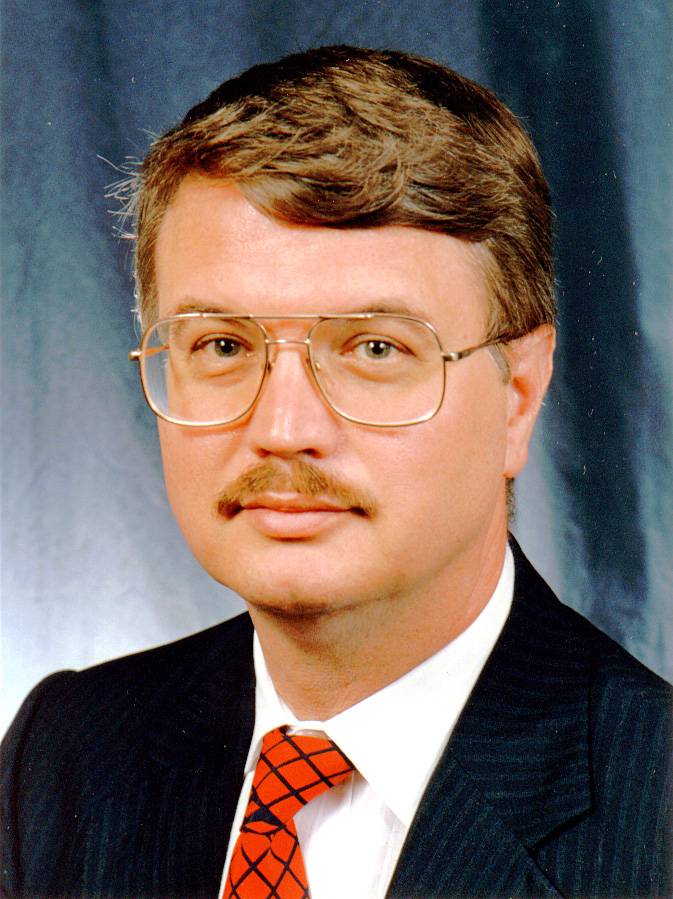
Danny Santucci, BA, JD, is a prolific author of tax and financial books and articles. His legal career started with the business and litigation firm of Edwards, Edwards, and Ashton. Later he joined the Century City entertainment firm of Bushkin, Gaims, Gaines, and Jonas working for many well-known celebrities. In 1980, Danny established the law firm of Santucci, Potter, and Leanders in Irvine, California. With increasing lecture and writing commitments, Danny went into sole practice in 1995. His practice emphasizes business taxation, real estate law, and estate planning. Speaking to more than 100 groups nationally each year, he is known …